


Belize Zoo and Jade Jungle Resort
- gaylemabery
- Mar 25, 2024
- 5 min read
After 6 amazing days sailing through the Caribbean reef and cayes of Belize, we started our inland adventure on a special day...February 29th! We're happy to have an extra day of adventuring during this Leap Year!
We'll be staying at the Jade Jungle Resort for the next three nights. Rather than renting a car, we opted to schedule transfers with our lodging establishments. Our transfer to the resort picked us up at the marina at 11am, and Felix, our driver, not only safely got us from point A to point B, but served as our guide along the way, including on a side excursion to the Belize Zoo!
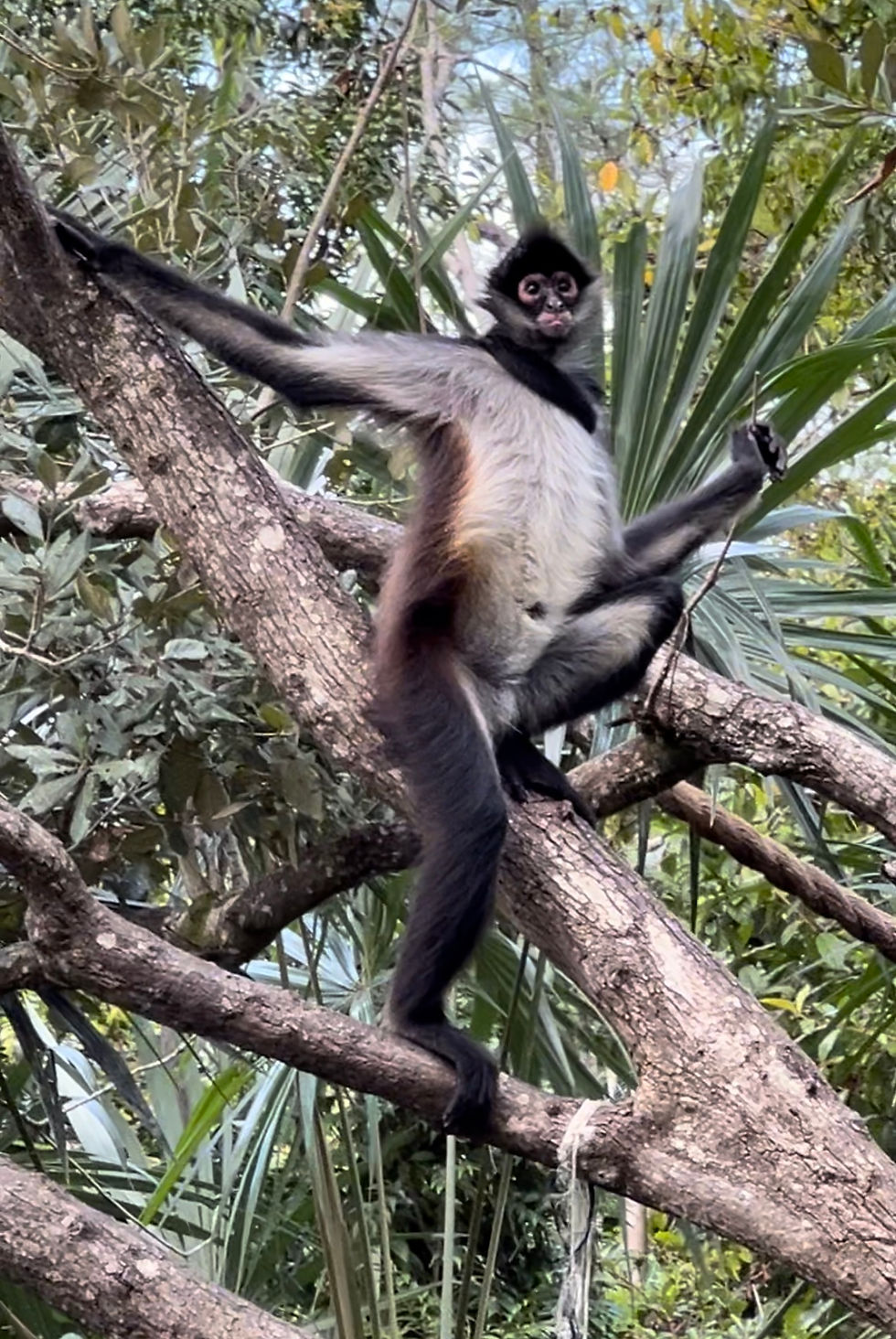
Spider Monkey at Belize Zoo
According to their website, the Belize Zoo was founded in 1983, starting out as a “backyard zoo” and growing into a world-renowned wildlife education center where visitors connect with Belize’s unique natural heritage: the animals. Today the Zoo cares for more than 160 animals representing 43 native species. This is also the first and only nature destination in Belize that is accessible to persons with physical disabilities. Pricing for international visitors is $30BZ for adults and $10BZ for children ages 3-12 (that's $15USD for adults and $5USD for kids).

Belize has over 125 species of mammals living within its boundaries (over 80 of which are different species of bats!). Those that live in the forests, jungles and savannas tend to be very secretive, and mostly nocturnal, including the five species of wildcats that are native to the country (Jaguar, Cougars, Ocelot, Jaguarundi and Margay). We knew we would be very lucky to spot a cat in the wild, so were happy to see all 5 at the zoo!
None of us really knew about tapirs before our trip to Belize, and we noticed on our first drive from the airport to our hotel the "Watch for Tapir" signs along the highways. They were as prolific as the "Watch for Elk" signs we see in Northern Arizona. We learned at the Zoo that the tapir is the National Animal of Belize.
The spider monkeys were very entertaining, seemingly as curious about us as we were of them. The howler monkeys were quiet and slow moving ... we'd get a much different impression of them over the next 6 nights in the jungle!

While we would see some wildlife on the remainder of the trip, this stop at the Zoo was a great way to get a good look at the beautiful animals of Belize!
After leaving the Zoo, we enjoyed the mostly rural scenery, traveling through small villages, to the larger city of Belmopan, until we reached Teakettle. Teakettle is a small settlement in the Cayo District of Belize with 300-400 households. We turned south at Benge's Cost Less Store in Teakettle to head to Jade Jungle Resort.
From the turn at Benge's, it's a 10km, 25 minute drive on dirt roads, through rural villages and through large agricultural areas with cattle (strange seeing cows grazing under the jungle palms!), horses, and large-scale teak and mahogany farms. TKO Farms (specializing in hardwood, tropical and citrus trees) has a significant presence in this region, as do various Mennonite populations, who focus on production of milk, cheese, beans, corn, melons, honey, chicken, and eggs.

We bumped along the road leading to the resort and emerged out of the dense jungle to see the charming thatched roof of the cabanas, cabins, dining hall and "front desk", with Karin standing in the drive with a beautiful smile, ready to greet us at Jade Jungle Resort.

Karin led us to the central lounge/dining cabana (the only location for guest WiFi access on the property), where she had refreshing tropical punch waiting. She provided an orientation to the expansive property, explained when and where we would gather for meals, and pointed out the self-serve bar, where we could tally the number of drinks we consumed during our stay. We were also thrilled to learn that we had all been upgraded to the Jungle View Cabanas.

Jade Jungle Resort coordinates many off-site tours for their guests, and we would take advantage of that over the next few days. Today, however, with 300 acres of jungle, miles of trails, ancient Maya ruins, three swimming holes, a 5 acre meadow, swinging bridges, and various small farms and gardens on the property, there was plenty to do and see without going anywhere! After settling in to our rooms, we split up with part of our group heading down to explore the swimming holes in the Roaring River, and Gayle heading out to explore the lower trail system, which features the meadow, tree swings, Bay Palm Loop, Secret Garden, the Tapir Loop and a giant Ceiba tree.

We cleaned up after our adventuring, and then met at the lounge to have cocktails before gathering at 7:00 pm for dinner. As the sun set over the jungle, the bats started feeding at the hummingbird feeders, and the geckos chirped from all corners of the open-air lounge. In the distance, we heard the rhythmic whooping of some howler monkeys. We were definitely in the jungle now!

This eco-friendly resort uses solar power, so conservation is the key! Dinner was served in the main dining hall, with flickering oil lamps as the only light source at every table. Another unique sustainability feature is that the resort heats their water by burning Cohune nuts gathered from the jungle floor. This allows consistent hot water while not requiring additional gas or electrical resources for heating. There are 5 water heating ovens scattered among the cabanas and other facilities.

The meals served at Jade Jungle are prepared with ingredients that are local and fresh! The resort has 50 aeroponic towers that can grow up to 2,200 plants simultaneously. They also have several grow boxes and the Secret Garden that grow crops not suited for growth on the towers (the lime tree was full of fruit while we were visiting). Any produce they don’t grow on-site is purchased from local growers.
It was an eventful day, and we all turned in after our 4-course dinner, looking forward to our first night in the jungle. Each cabana did have an overhead fan, which was lovely given the warm and humid weather (the high approached 90 F, with lows in the mid-70s). We didn't need the bug net around the bed, but it might have come in handy if we had been visiting during the rainy season when the mosquitos are more noticeable.

We traded the soft waves of the sea for the sounds of the jungle to lull us to sleep! Tomorrow we are headed out for cave tubing at the Nohoch Che'en Caves Branch Archeological Reserve.


Comments