


Exploring Caye Caulker and the Barrier Reef in Belize
- gaylemabery
- Mar 9, 2024
- 6 min read
Updated: Mar 10, 2024
There is something special about sunrise over the water. The soft lapping of waves hitting the boat or shore seems to set the rythym for the day. Sunrise on Ambergris Caye was no disappointment, and we were looking forward to our first upclose experience with Caribbean sealife.

After a "light" breakfast of hard boiled eggs, mango and strawberry yogurt, granola and bagels, the divers headed to Amigo Del Mar Dive Shop for their 8:30 am departure to dive just beyond the barrier reef in the Hol Chan Channel. Snorkelers headed out at 9:00 am enroute to Zone A of the Hol Chan Marine Reserve (The Coral Reef at the Hol Chan Cut) and Zone D (Shark Ray Alley).

The Belize Barrier Reef (190 miles long) is part of the largest barrier reef (the 560 mile Mesoamerican Reef) in the Northern Hemisphere, and second largest in the world (after the Great Barrier Reef in Australia). The reef is Belize's top tourist destination, popular for scuba divers and snorkelers like us, and attracts almost half of the country's visitors. It is also vital to the country's fishing industry. As one of the most pristine reef ecosystems in the world, we were not disappointed!

This first day of diving and snorkeling introduced us to an abundance of the "big" wildlife the reef had to offer ... green moray eels, spotted eagle rays (with up to 6 foot wing spans), nurse sharks, black tip sharks, bull sharks, reef sharks, southern sting rays, manta rays, loggerhead turtles, green turtles and hawksbill turtles. And, with over 500 species of fish calling this reef home, we saw way too many fish to mention!
While the divers completed two dives out in the Channel (Scott had a lengthy encounter with the Green Moray Eel in the video above), the snorkelers spent an hour at the Hol Chan Cut, then headed to Shark Ray Alley in Zone D. In Zone D, the sharks and rays hear the dive boats approaching and begin to school in anticipation of bait being thrown into the water. As the boat captains chummed the water, we jumped overboard and snorkeled with nurse sharks and rays boiling around us. While these are all wild animals and have to be respected as such, they've adopted a great tolerance for divers and snorkelers. The nurse sharks average 4-6 feet in length (though we saw some that were bigger than this) and the wing-span of the rays in this area were 2-4 feet. It's not quite what I'd call a "natural" experience given the bait chumming and the tameness of the wildlife, but its still heart-pounding when you first jump in the water with the sharks. A unique experience for sure!
After we were done in the water, we returned to the Tranquilo, where Brianna had fresh grouper tacos with papaya pico de gallo ready for lunch. Captain Rueben set sail for Caye Caulker (11 miles south of Ambergris Caye and Belize's second largest island) as we ate and cleaned up from our morning adventures. By the time we reached our destination, we had time for another delightful appetizer from Bri (did I already say we were going to gain weight on this trip?!)...yummy deviled eggs.

We arrived at Caye Caulker, anchoring offshore, and took the dingy across the shimmering blue waters to the island so we could arrange for tomorrow's diving with French Angel Expeditions. The island is about 4 miles long, but the town is only about a mile long. Caye Caulker was primarily a fishing community; but its economy has become increasingly tourism-based. Transportation on the island is by golf cart or bicycle, and both weave among the barefoot pedestrians on the narrow sandy streets. According to my research, Caye Caulker is a popular destination for scuba divers, snorkelers, anglers, and tourists who want beach-oriented relaxation at budget prices.

After arranging for tomorrow's dive, we wandered the streets in search of the Tarpon Feeding dock that Captain Rueben recommended. Google maps took us right to it, which was fortunate because there was no signage to direct us! We were actually quite surprised when we stumbled upon the non-descript dock down a rather uninviting side street!
Feeding tarpon isn't your typical fish feeding experience! These fish have been swimming in coastal waters since prehistoric times. Growing up to 8 feet long and weighing up to 280 pounds, they are a bit intimidating. A popular game fish, Tarpon are known for putting up a good fight, and their ability to jump out of the water. In Caye Caulker, you’ll find them swimming around the coast and hiding in the shade of the trees. The dock we visited was swarming with them. For $5 Belizian, we got a cupful of bait. You then kneel on the dock with an anchovie hanging down between your thumb and forefinger, and the fish leap up to grab the fish. It's a little terrifying after you've been watching these monster fish swimming around, and then one launches in a sneak attack from underneath the dock to grab your fish! The slow-mo video recordings are hilarious!
After wandering down Avenida Hicaco, we finally ended up at The Split, which is a narrow channel that divides the island of Caye Caulker into two. The channel is the result of Hurricane Hattie, which hit Belize in 1961, causing major devastation across the country.

We had some very overpriced drinks at the bar, met a local who sold Scott and hand-woven palm hat, then enjoyed the sunset while sitting on the seawall, with a shark lazily swimming under our dangling feet.

After sunset, Rueben picked up the girls first, and while we took the dingy out to the Tranquilo, the guys waited and learned why all the locals departed at sunset ... the mosquitos came out in full force! By the time Rueben returned to pick them up, they all had plenty of bug bites! They seemed to forget the itching when we sat down to another amazing dinner... pork loin, mashed potatoes and veggies, with vanilla ice cream and bananas foster for dessert.
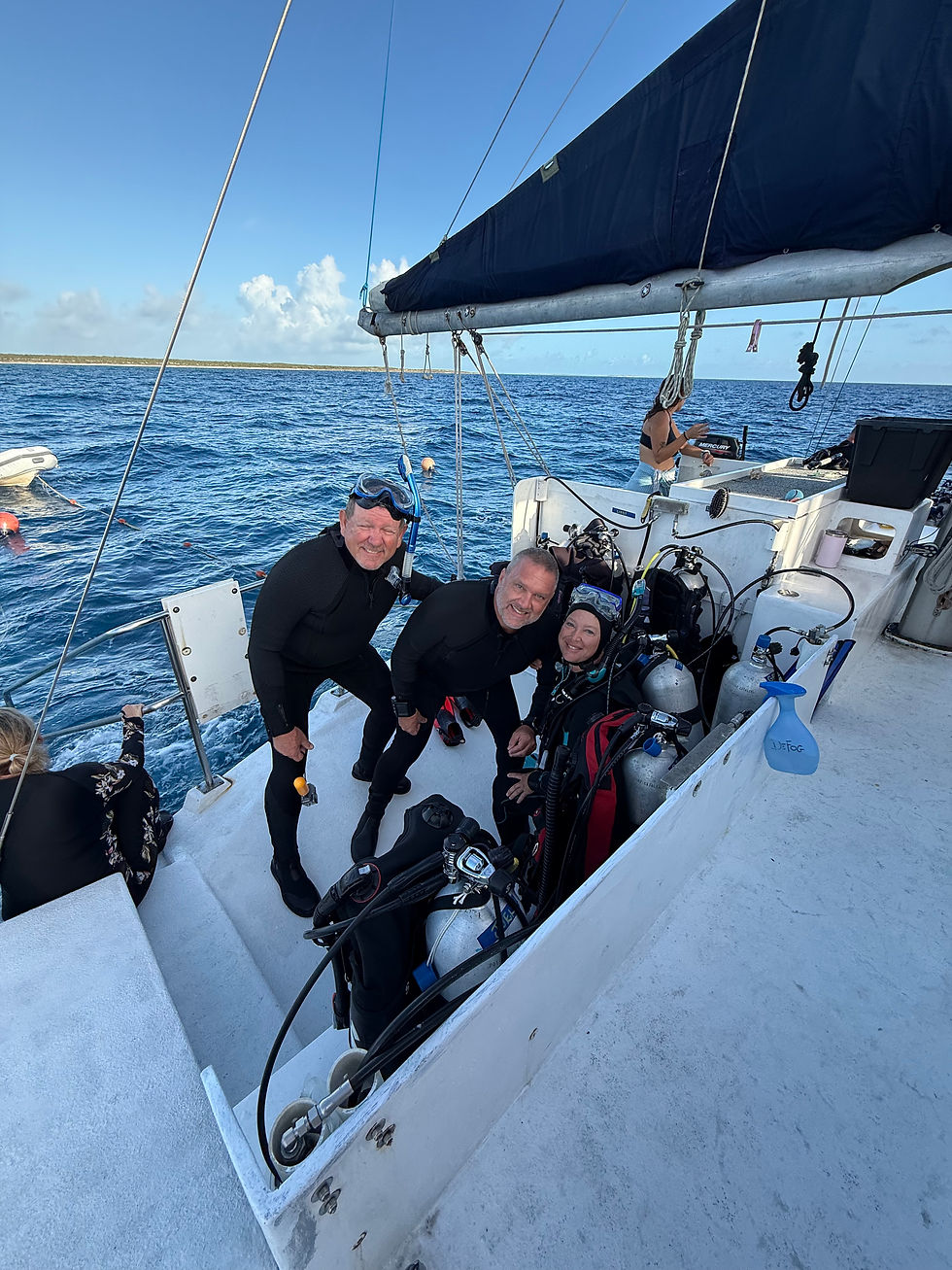
Being anchored offshore, the gentle rocking of the waves lulled us to sleep that night. In the morning, we went to a dock and topped off the boat's freshwater supply. We then met the dive boat from French Angel Expeditions and sent our divers off for their two scheduled dives.

Once our divers were handed off, Captain Rueben set sail for a reef near Caye Chapel, where he anchored and led us on a snorkel tour. This tour was so much different than the previous day, as we had this reef all to ourselves! A pair of Spotted Eagle Rays gracefully glided above the reef and gave us quite a show for about 15 minutes. Several hawksbill turtles popped up right next to the boat, and we got a chance to swim with them as well. Rueben, who is also a Scuba Dive Master, showed his comfort in the water, diving down to depths of 10-20 feet to point out interesting fish and other wildlife. He found a beautiful urchin shell, which he brought up for us to hold.

The divers were just off the reef, near our snorkeling spot, and had another phenomenal dive. Scott's GoPro really captured the beautiful color of the corals, and the variety of the terrain that they explored.
We were all hungry after an active morning in the water, and Brianna cooked up a hardy hamburger lunch that we enjoyed as we set sail for Saint George Caye.

St. George Caye is 15 miles from Caye Caulker, and Reuben offered to go beyond the reef so we could try some deep sea fishing on the way to St. George. The reef provides a natural break for the ocean waves (the "barrier"), so the waters beyond the reef were much rougher. Jill and Gayle took some dramamine in advance, and parked themselves on the upper lounge deck next to the helm (where Rueben had advised they'd have the smoothest ride). We didn't catch any fish, but Jill and Gayle survived with no seasickness, so all was well!
Late that afternoon, we anchored in front of the Saint George Caye Resort. We had intended to explore the resort, but it was rented out to a private wedding, so we couldn't go ashore. Bri cooked up another amazing dinner ... shrimp fettucine!

After dinner, we had a lazy evening lounging on the boat, and playing Liar's Dice, which Captain Reuben introduced to us. We've always been a game playing group, so we were happy to learn this one! According to Wikipedia, Liar's Dice originated as a bluffing board game titled Dudo during the 15th century from the Inca Empire, and subsequently spread to Latin American countries. The game later spread to European countries via Spanish conquistadors. Reuben referenced it as a "pirates game". In any case, it has entertained players for centuries!
Tomorrow will be the last day for scuba diving, and we'll spend our last two nights exploring some of the smaller, private islands to the south.


Comments